Struggling to get your students to get your students to start warm ups or bell ringers as soon as they step in the door? Here’s how I used a few stamps to completely change the way I start my classes each day.
The Problem
When I first started teaching, I gave up on using any sort of warm-up or bellwork pretty quickly. I’d put a problem up on the board for students to complete when they came into the room, but the students would come in and ignore it, or wait until the absolute last minute. And even then, many of them would just copy each other. I didn’t really feel like there was any learning or benefit to using them.
Does any of this sound familiar?
Here’s How a Stamp Changed Everything
A few years into teaching, I decided to give bellwork another try because I was really looking to have students review and practice concepts right as they came into class. I was also tired of the students coming in off task and causing issues until class started.
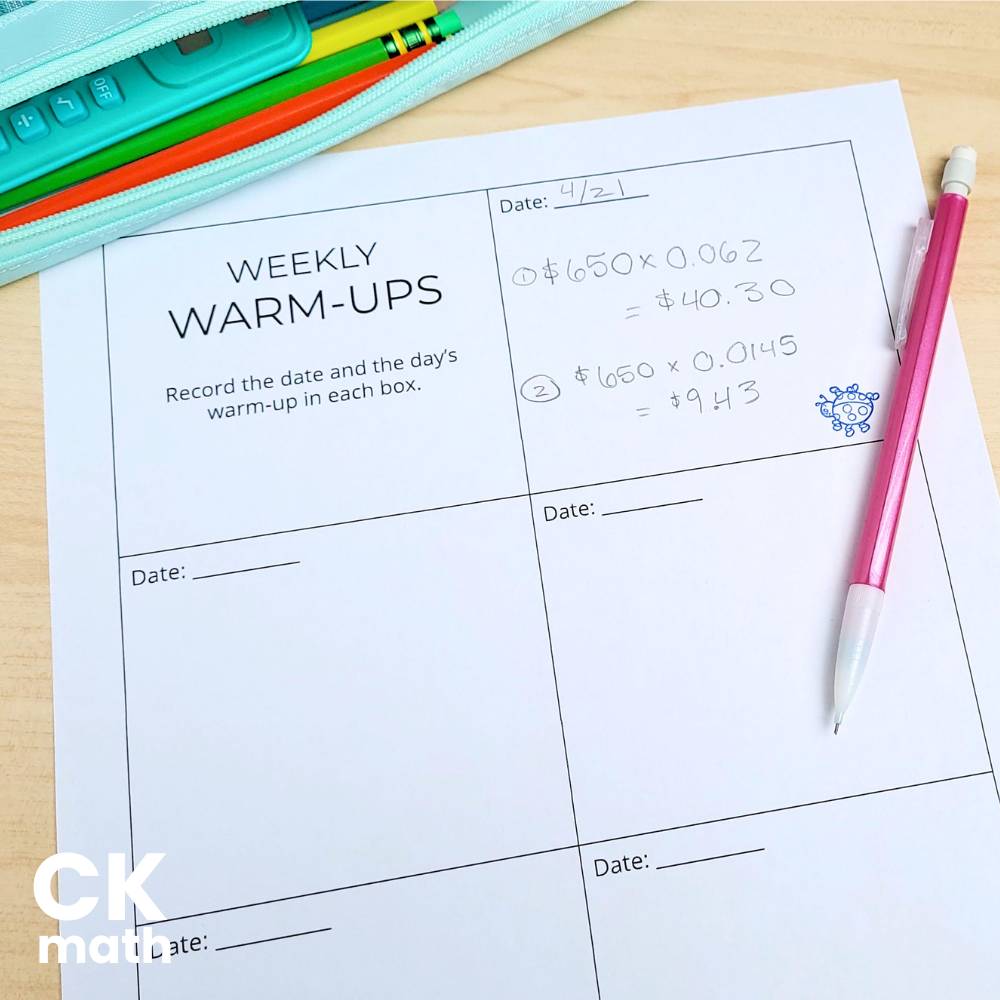
I created a sheet with five boxes on it – one for each day of the week. I made it double-sided so it would last for two weeks.
Before students would come in, I’d post a problem for them to complete on the board.
When they came in, the expectation was that they would complete the problem as soon as they sat down.
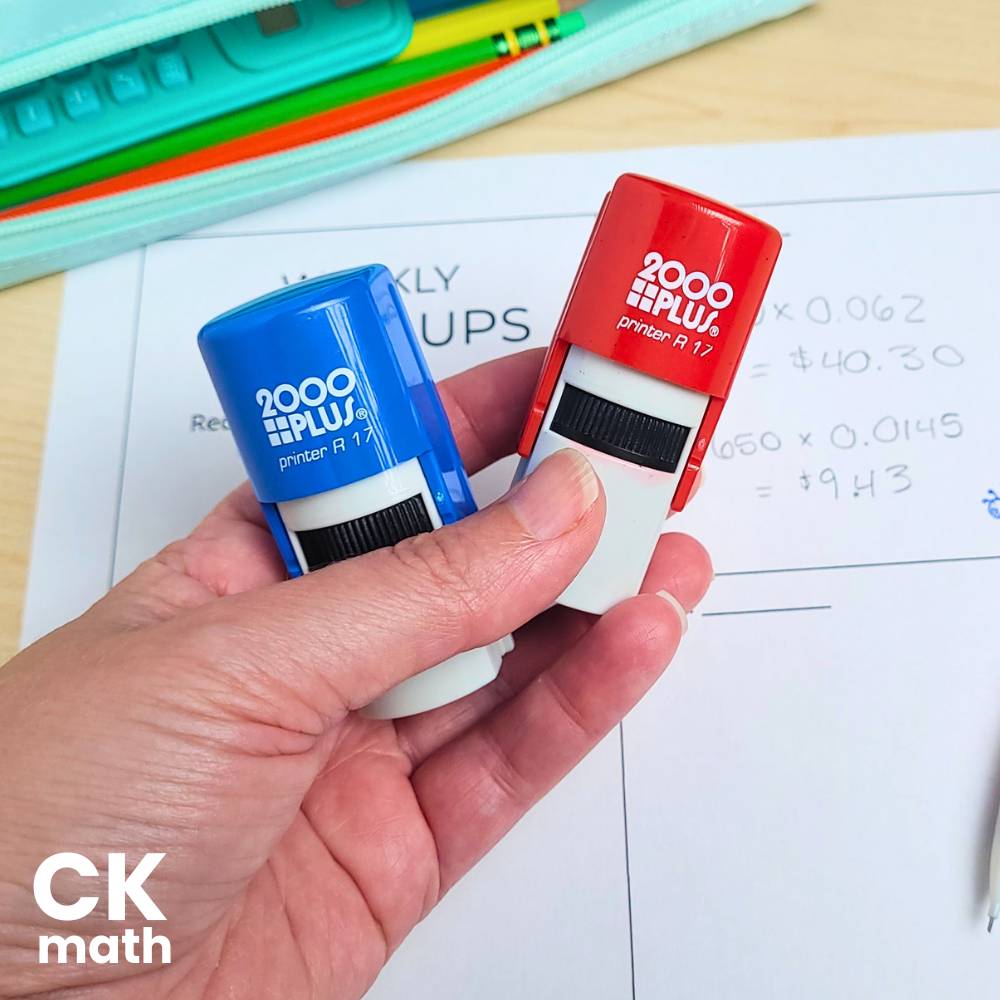
To make sure they did this, I’d casually roam the room with a stamp in my hand as they sat down. Any student who sat down, started quietly working, and showed effort would have their paper stamped.
I didn’t look for the student to complete the problem, just that they came in, started the problem, and showed effort.
This did two things:
- It incentivized students to come in and get started right away.
- It significantly cut back on cheating because students knew that I didn’t care if they got the problem right; I only cared if they were making an honest effort.
If you’re thinking this is way too much work, having to constantly roam the room at the beginning of class, it is a time commitment up front; however, the majority of the time is spent at the beginning of the year when students are learning expectations.
As the year progresses, putting the stamps on paper happens really fast.
The Stamps
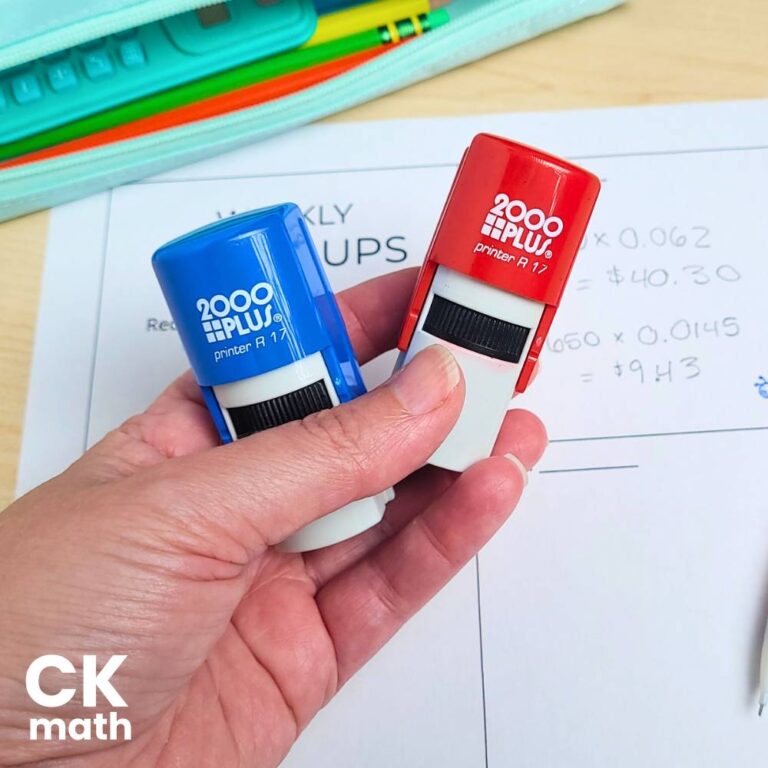
I use a self-inking stamp to make things easy. The stamps add their own ink, so you don’t have to worry about a stamp pad.
I’ve had the same set of stamps since I started doing bellwork this way (years!), and they have held up great!
You can find the stamps I use here.
How I Grade Them
Students keep their bellwork sheet in their folders or binders for two weeks, and then turn them in. I count the number of stamps, then give them that number of points. (10 stamps = 10 points, 8 stamps = 8 points, etc.) I put these points in a participation grade category that is only worth 5 – 10% of their grade.
You don’t have to grade these – but I recommend adding a grade every once in a while to keep students accountable.
Having Students Explain Their Work
A few years later, I added a second part to my bellwork routine.
I started requiring a few students each class period to come to the board to explain their work. If there were two questions in the bellwork, I’d have two students come up.
I keep a student roster on a clipboard at the front of my room. Each time a student volunteers to come up, I cross them off the list. I don’t allow a student to volunteer a second time until the entire class has been marked off the list. (Of course, there are occasionally exceptions to this if there is a student who has an accommodation that states they are exempt from speaking in front of the class.)
Students are very fast to volunteer because they do not want to be one of the last students stuck on the list, and not know what problem they might be left with.
For students who are nervous, I encourage them to check their answers with their neighbors before going up. I also allow them to write their work on the board, but then explain their thinking from their seat because some students are very intimidated by standing at the board.
Once all students in the class have volunteered, I start a new class list and give everyone a few participation points.
This process has made such a huge difference in allowing students to see different ways problems can be solved and also how to defend their thinking.
What problems should you use?
I generally just make up a few problems that review concepts from previous units, reinforce skills from my current unit that students may be struggling with, or that give students a topic to discuss.
It only takes a couple of minutes each morning to make up a few problems.
If you’re looking for something that’s done for you, here are a few sets of bellwork/warm ups that you can use:
Number of the Week – Weekly practice that can be used as bellwork to review mental math and number sense skills
Equation of the Week – Weekly practice that can be used to keep students proficient with solving equations all year long.
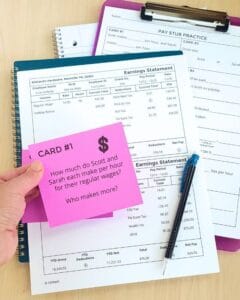
Personal Finance Warm Ups – A semester-long set of warm-ups for a personal finance course that can be used to review topics or spark discussion.
Looking for more ideas for your classroom?
You can find more ideas for your math class here.
You can find more ideas for your personal finance class here.