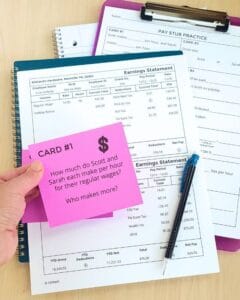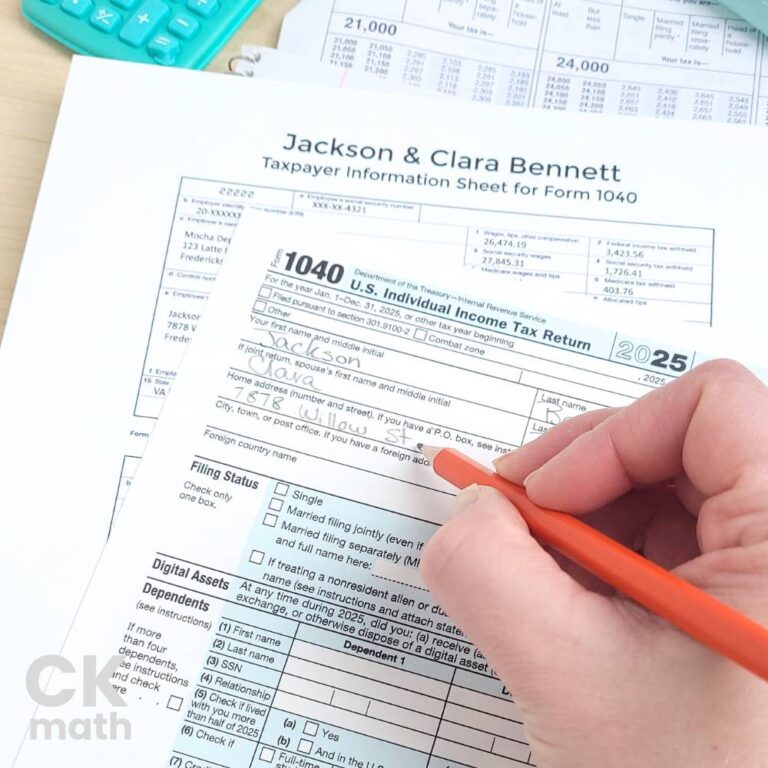
This past year, I’ve been working on new consumer math resources that simulate the types of skills students will need in the real world. It’s taken me a while, but I’m really happy with how these projects and activities turned out.
As a math teacher, things like calculating sales tax, discounts, and unit prices are all things I’d love to make more time for, but it’s hard to fit in with all the other math standards.
I’ve had these ideas in the back of my mind for years, but I just haven’t had the time. I wanted resources that could be used any time of year, that students would find useful and valuable, and that would challenge students to learn about real prices in a real-world context.
The best thing about these resources is that they could fit into a very wide range of courses. Aside from math, they would work great for family and consumer sciences, economics, social studies, and special education classes, just to name a few.
Here are the skills you’ll find in these activities:
- Calculating discounts in a store setting
- Calculating sales tax on a purchase
- Calculating a total restaurant bill, including tax, tip, and other fees
- Comparison shopping using unit rates
Sound like skills you’d like to include in your class? Here are three ideas for you.
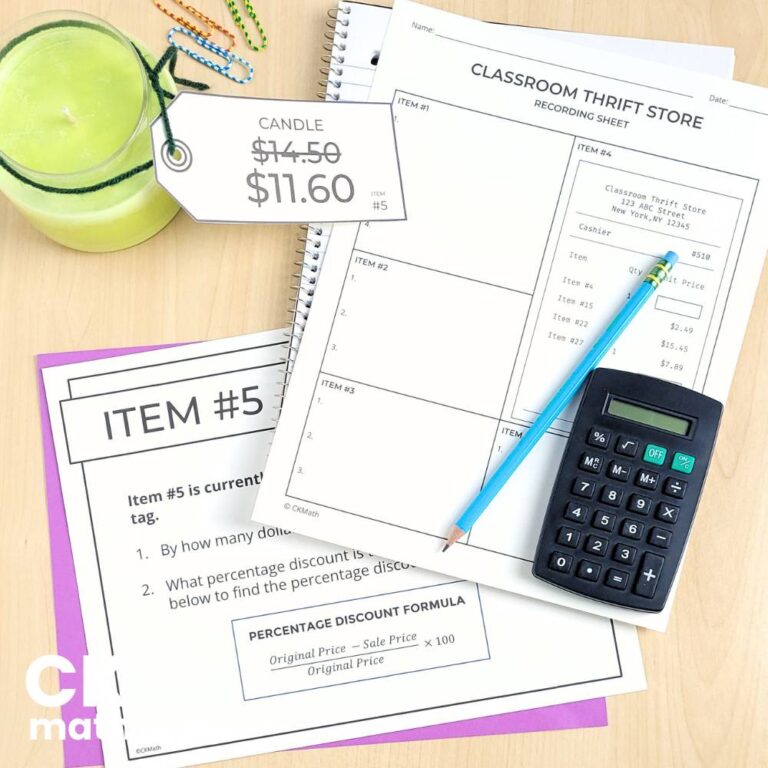
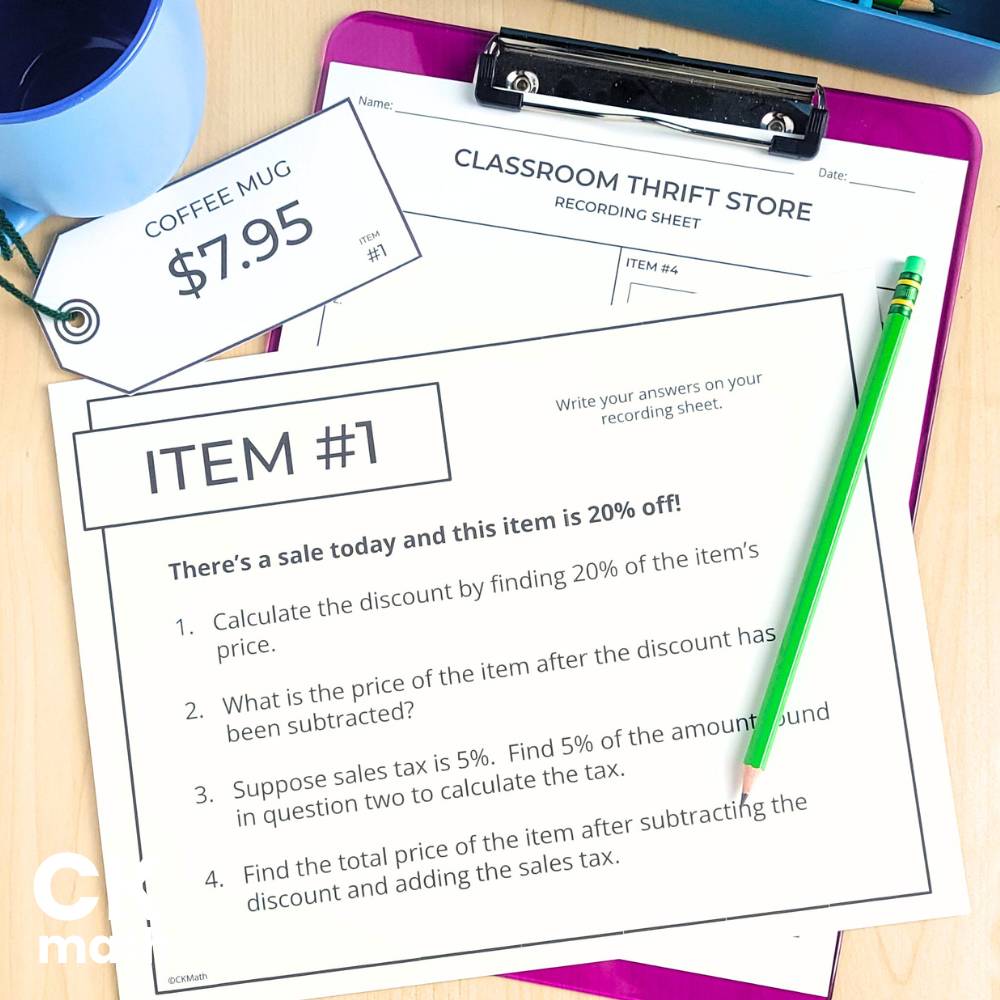
Classroom Thrift Store – Practice with Totals, Discounts, and Sales Tax
This activity allows you to turn your classroom into a ‘thrift store’! You’ll bring in ten items (or better yet… have your students bring them!) and label them price tags.
The activity includes ten stations. You’ll set up each station with an item, a price tag, and one of the ten station cards.
Students will rotate through the stations and complete the tasks at each one. Tasks include finding the total price including sales tax, calculating the price after a discount, filling in the blanks on a receipt, and more.
I recommend printing the price tags on cardstock and putting the station cards in dry-erase pockets (my favorite!), so they hold up well between classes.
You can find this resource here. It includes editable price tags, ten station cards for each activity, and a recording sheet for students.
The Cost of Dining Out – Tasks for teaching taxes and tips
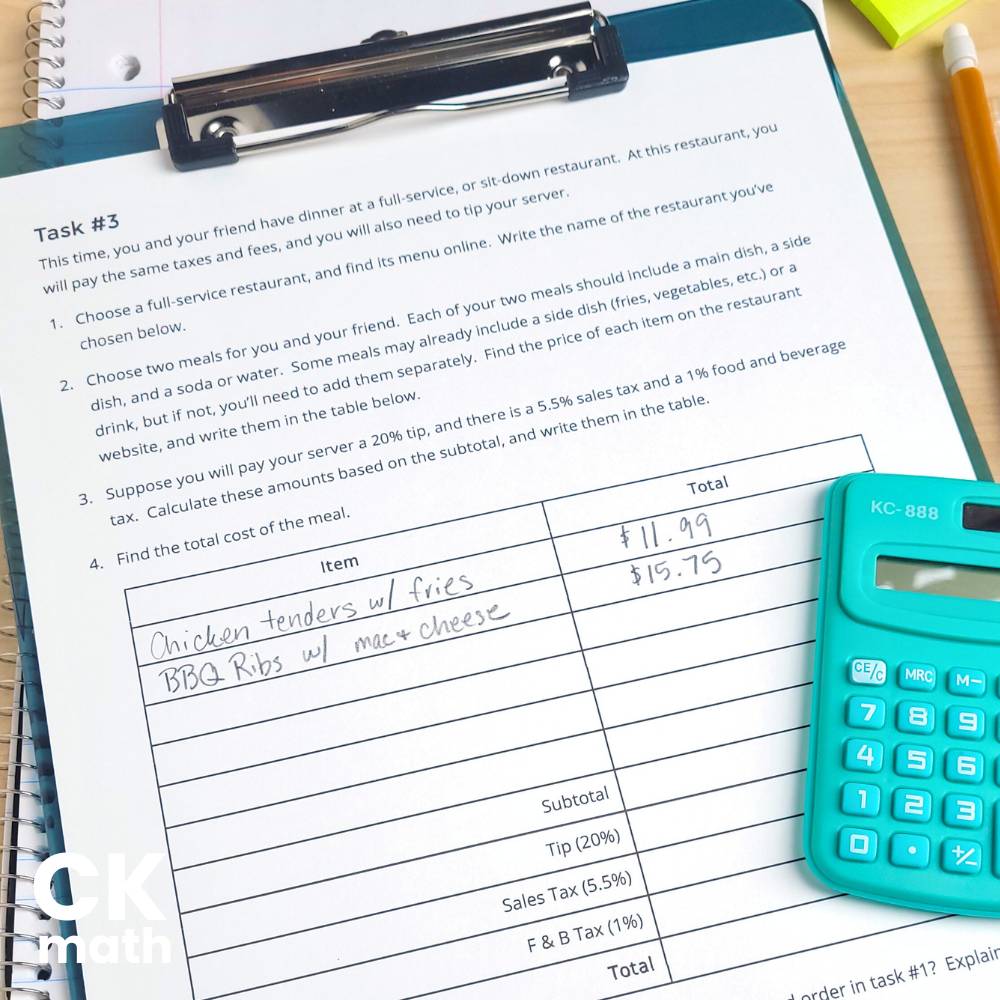
Of these three activities, this is my favorite and the one I think students will enjoy most. It includes four tasks in which students will use real restaurant menus to calculate the cost of dining out.
The tasks include things like finding the price of eating at a fast-food restaurant, including taxes, eating at a fast-food restaurant while staying within a budget, and eating at a full-service restaurant, including taxes and tip.
Students can look up menu prices at their favorite restaurants, or if you’d prefer to keep them off the internet, you can print a selection of restaurant menus for them to choose from.
You can find this resource here!
Shopping for a Cookout – Practice comparison shopping using unit prices
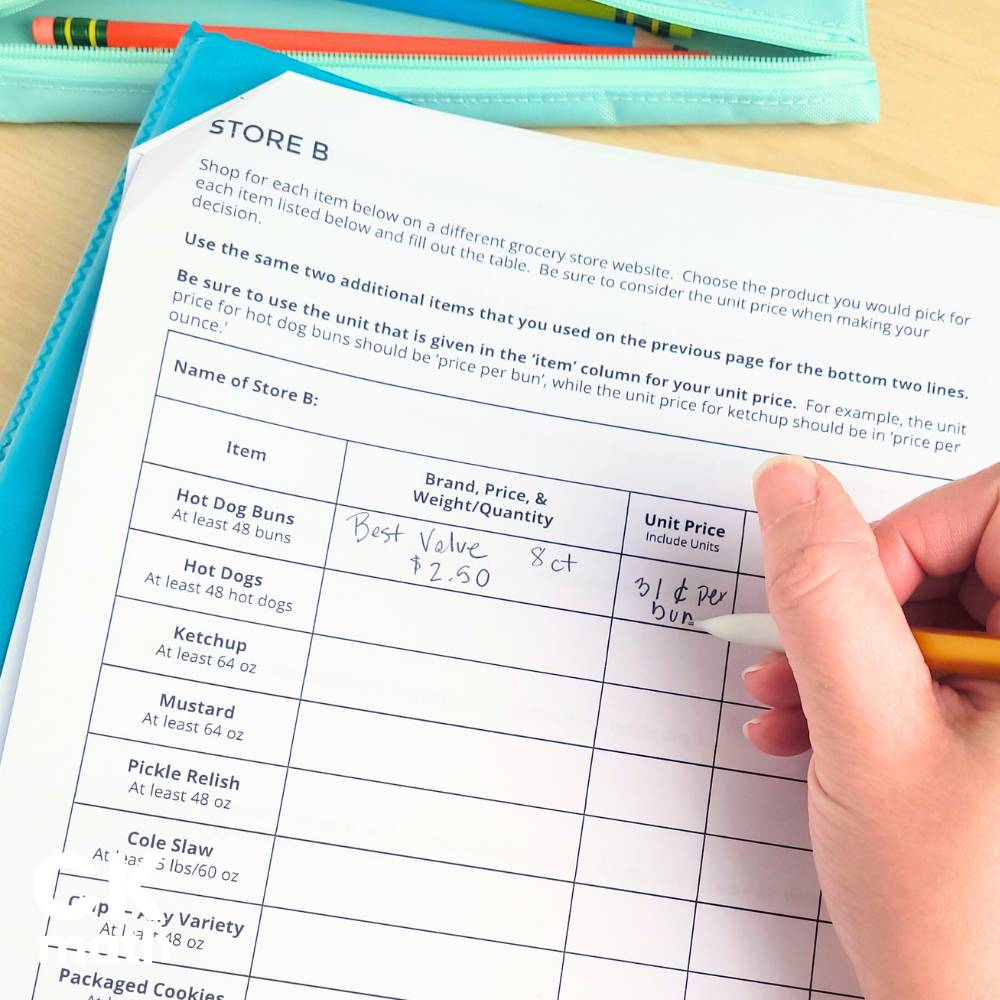
This activity has your students shopping for all the ingredients they’ll need for a cookout. They’ll shop for items on two different grocery store websites to compare prices between the two stores.
For each item, they’ll calculate the unit price and determine the total quantity needed for a group of 24 people.
For me, the fun part of this activity is that students use real grocery store websites to find their items, so they’ll be learning what items really cost (… and not ‘fake’ grocery prices from outdated worksheets.)
If you’d like to give your students some choice, this activity also includes spaghetti dinner, taco dinner, and pancake breakfast versions, so they can choose which type of event they’d like to shop for.
And if your students are a little rusty at calculating unit prices, the activity includes a whole-class guided example you can do together before they start on their own.
You can find this resource here!
Looking for more consumer math lessons and activities?
You can find all CKMath resources for teaching skills like discounts, sales tax, unit prices, comparison shopping, and more here.